When Mindfulness Becomes Its Own Kind of Trap
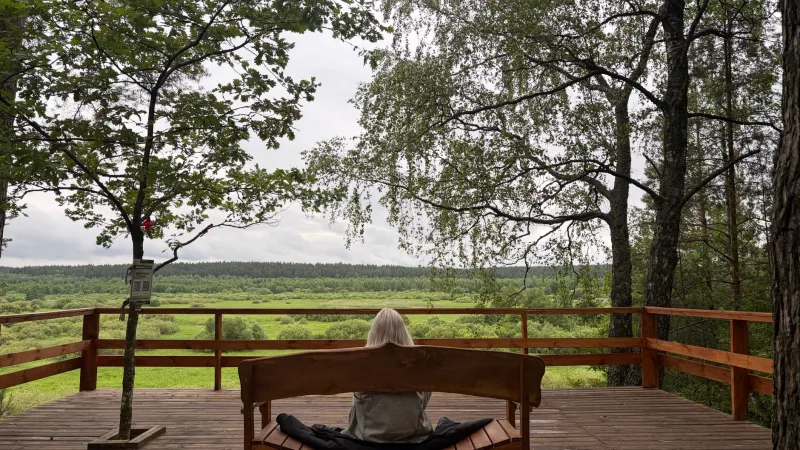
Let's be real for a second. The wellness industry has done a fantastic job selling us on the idea that more mindfulness equals more peace. More meditation apps, more breathwork sessions, more journaling prompts, more body scans — all of it packaged as the antidote to modern American chaos. And honestly? A lot of it works. Mindfulness practices genuinely help millions of people manage stress, sleep better, and show up more fully for their lives.
But here's the thing nobody talks about at the yoga retreat or in the five-star app reviews: for some people, more awareness isn't the answer. Sometimes it's the problem.
The Watcher Who Never Rests
Imagine you've just started a meditation practice. At first, it feels great — you're noticing your breath, catching yourself before you snap at your partner, feeling a little more grounded during a stressful workday. Progress. Real, tangible progress.
Then, slowly, something shifts. You start monitoring your emotional state constantly. You catch yourself analyzing your reactions in real time, labeling every feeling as it surfaces, checking in with your body so frequently that you can barely get through a meal without running an internal diagnostic. You're not living your life anymore. You're watching yourself live it.
This is what psychologists sometimes call hypervigilance — a state of heightened self-monitoring that, while well-intentioned, keeps your nervous system in a low-grade state of alertness. It's the mental equivalent of never putting your phone down because you might miss something important. The irony is brutal: in trying to become more aware, you've made yourself more anxious.
Awareness Is a Tool, Not a Lifestyle
Here's an analogy that might land differently. A hammer is an incredible tool. It drives nails, builds homes, holds communities together. But nobody walks around swinging a hammer at everything they encounter, just in case something needs fixing. Tools exist to solve specific problems, then get set down.
Mindfulness works the same way. It's extraordinarily useful when applied with intention — when you're feeling reactive, when you need to ground yourself before a hard conversation, when anxiety is spiking and you need something to anchor you. But when awareness becomes a constant, compulsive practice rather than a chosen one, it stops being a tool and starts being a burden.
Researchers at the University of Toronto have explored this territory, finding that certain forms of self-focused attention can amplify negative emotions rather than dissolve them. The goal of mindfulness, after all, is to help you engage more freely with your life — not to turn you into a full-time observer of it.
The 'More Is Better' Myth
American culture has a deep love affair with optimization. We count our steps, track our sleep cycles, log our macros, and now — increasingly — we grade our mental states. Meditation streaks on apps, mood journals, breathwork timers. All of it well-meaning. All of it potentially feeding the same perfectionist, achievement-oriented mindset that drove us to burnout in the first place.
If you've ever felt guilty for skipping a meditation session, or anxious because your mindfulness practice didn't feel mindful enough, you've brushed up against this trap. The practice that was supposed to free you from performance pressure has become another performance.
The spiritual teacher Adyashanti once said something that stuck with me: "Awareness doesn't need to be improved. It just needs to be recognized." There's a kind of radical rest in that idea — the suggestion that you don't need to do more, watch more, or track more. You just need to trust that awareness, in its most natural form, is already present.
Signs You Might Be Overdoing It
How do you know if your mindfulness practice has crossed a line? A few honest questions worth sitting with:
- Do you feel more anxious after meditating than before? Some discomfort during practice is normal, but if your sessions consistently leave you wound tighter, that's worth noticing.
- Are you spending more time analyzing your feelings than actually feeling them? There's a difference between emotional awareness and emotional rumination. One moves through you; the other circles.
- Has your practice started to feel like an obligation? Dread and mindfulness don't mix well.
- Are you using self-monitoring to avoid being present? Sometimes constant check-ins are a sophisticated way of staying out of the moment, not in it.
If any of those hit close to home, you're not broken — you're just human, and you've likely absorbed a message that more is always better. It isn't.
Finding the Balance That Actually Fits You
So what does healthy awareness look like? Honestly, it looks different for everyone, and that's kind of the point.
For some people, a ten-minute morning meditation is genuinely grounding. For others, a walk outside without headphones or a few quiet minutes over coffee does the same job. The format matters far less than the quality — whether the practice actually creates space in your day or just adds another item to the checklist.
A few practical shifts worth trying:
Give yourself permission to stop. If you're mid-meditation and it's making you more anxious, you're allowed to stop. Awareness isn't a punishment.
Try scheduled check-ins instead of constant monitoring. Rather than running an emotional diagnostic every hour, pick two or three moments in the day — morning, lunch, evening — to genuinely check in. Then let it go the rest of the time.
Spend more time doing, less time watching yourself do. Cook a meal without narrating your emotional state. Have a conversation without analyzing your reactions mid-sentence. Let yourself be absorbed in something.
Redefine what 'intentional living' means to you. At Become Aware, we talk a lot about waking up and living with purpose. But intention doesn't require constant surveillance. Sometimes it just means showing up, doing your best, and trusting that's enough.
The Quiet Courage of Letting Go
There's something quietly courageous about stepping back from a practice that culture tells you is unambiguously good. It requires trusting your own experience over the noise of wellness marketing and app notifications.
Mindfulness, at its core, is about freedom — freedom from reactivity, from autopilot, from the relentless chatter of an untrained mind. But freedom doesn't come from watching yourself more carefully. It comes from learning, over time, when to pay attention and when to simply let yourself live.
You don't need to be aware of everything, all the time. Sometimes the most conscious thing you can do is put down the hammer and just enjoy the house.