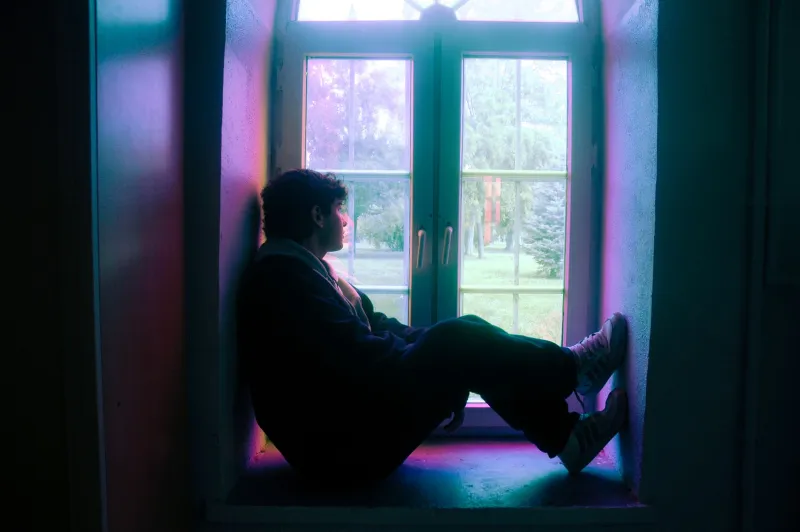
Knowing Better Doesn't Mean Doing Better — Here's Why That's Not Your Fault

Here's a scenario that might feel uncomfortably familiar: you finish a meditation session feeling genuinely clear-headed. You've identified the pattern. You know why you snap at your partner when you're stressed, why you reach for your phone the second you feel bored, why you say yes to things you desperately want to say no to. The awareness is right there — crisp and undeniable.
And then life happens, and you do the thing anyway.
If you've ever sat with that particular flavor of frustration — the one that comes from knowing better and still not doing better — you're not alone. And more importantly, you're not broken. What you're experiencing has a name, and it's something researchers and psychologists have been wrestling with for decades.
The Knowing-Doing Gap Is a Real Thing
Psychologists sometimes call it the intention-behavior gap. Philosophers have called it akrasia — acting against your better judgment. Whatever you call it, the experience is the same: your rational mind and your automatic behavior are operating on completely different tracks, and awareness alone isn't always enough to switch them.
The reason this happens isn't weakness or lack of discipline. It's neuroscience.
Your brain is a prediction machine obsessed with efficiency. When you repeat a behavior enough times — checking social media when you're anxious, stress-eating after a hard meeting, avoiding difficult conversations — your brain encodes that behavior as a habit loop. The sequence gets stored in the basal ganglia, a region of the brain that operates largely below the level of conscious thought. Once a habit is established there, your prefrontal cortex (the part responsible for rational decision-making and, yes, mindfulness) has to work against that automated system every single time you want to behave differently.
Meditation and self-awareness build capacity in the prefrontal cortex. That's genuinely valuable. But they don't erase the grooves worn into your basal ganglia. They just give you a slightly better chance of catching yourself before the loop completes.
Why Insight Feels Like It Should Be Enough
There's something seductive about the idea that if you just understand yourself deeply enough, change will follow naturally. A lot of wellness culture — and honestly, a lot of mindfulness content — leans hard into this idea. Become aware enough, the messaging implies, and transformation is inevitable.
This sets people up for a specific kind of suffering. When the change doesn't come automatically after the insight, the conclusion most people reach is that they're doing awareness wrong, or that they're uniquely resistant to growth, or that they simply don't have the willpower other people seem to have.
None of that is accurate. What's actually happening is that insight and behavior change are two separate skills, requiring two separate sets of conditions to develop.
Decision Fatigue Makes It Worse
Here's another layer: even when you do successfully engage your prefrontal cortex to override an automatic behavior, that takes energy. Real, measurable cognitive energy. And that resource depletes throughout the day.
Research on decision fatigue — most famously studied in judges making parole decisions — shows that the quality of our choices degrades as mental bandwidth decreases. By evening, after a full day of work, parenting, commuting, and just existing in a relentlessly stimulating world, the part of your brain that supports conscious, intentional behavior is running on fumes.
This is why your mindfulness practice might feel solid at 7 a.m. and completely inaccessible at 9 p.m. It's not inconsistency. It's biology.
So What Actually Helps?
Bridging the knowing-doing gap requires working with your brain's architecture rather than trying to willpower your way past it. A few approaches that actually have evidence behind them:
Make the desired behavior the path of least resistance. Your basal ganglia responds to cues and context. If you want to meditate in the morning, put your cushion where you'll trip over it. If you want to eat differently, restructure what's visible in your kitchen. Environmental design does a lot of the heavy lifting that willpower can't sustain.
Shrink the behavior until it's almost embarrassingly small. BJ Fogg's research at Stanford on behavior design consistently shows that tiny habits — ones that require almost no activation energy — are far more durable than ambitious ones. A two-minute breathing practice done daily rewires more than a 45-minute session done occasionally.
Create implementation intentions. This sounds clinical, but it's simple: instead of "I want to be less reactive," try "When I feel my chest tighten during a stressful conversation, I will take one slow breath before responding." Specific if-then plans dramatically increase follow-through because they pre-load the decision into a moment when your cognitive resources are still intact.
Drop the shame spiral. This one is non-negotiable. Self-criticism after a behavioral slip activates the brain's threat response, which actually reduces access to the prefrontal cortex — the exact region you need to make better choices next time. Shame doesn't motivate change; it neurologically impairs it.
Awareness Is the Beginning, Not the Destination
Becoming aware of your patterns is genuinely important work. It's the necessary first step. But awareness was never meant to carry the whole load. It's the light that lets you see the room — you still have to do the work of rearranging the furniture.
The most honest thing anyone in the mindfulness space can tell you is this: insight is a starting point, not a solution. Real behavioral change is slow, iterative, and frequently imperfect. It involves building new neural pathways through repetition, not just recognizing old ones through reflection.
You know what you should do. That's not nothing — that's actually a lot. Now the work is building the conditions, the structures, and the self-compassion to close the gap between that knowledge and your daily life. One small, specific, shame-free step at a time.